collectibleinfinite.com

Uncirculated Iraqi Dinar

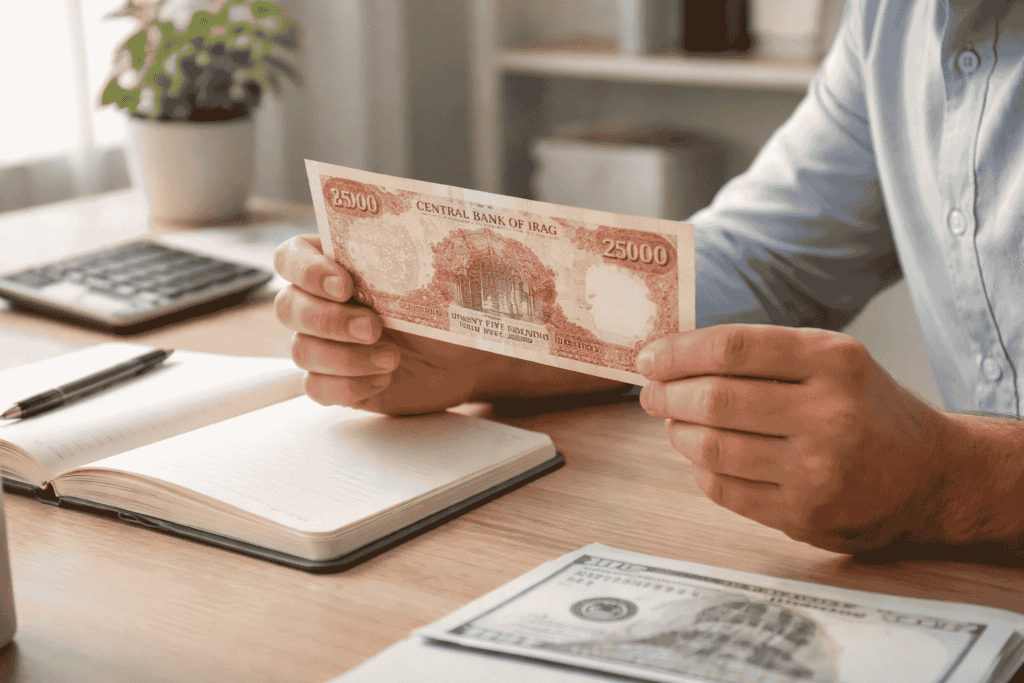
Close-up inspection of a 25,000 Iraqi dinar 2003 series note using magnification to verify security features.

How to Spot a Fake 25,000 Iraqi Dinar Note: 5 Security Features Explained

The 25,000 iraqi dinar note is one of the most searched and widely collected modern banknotes in the world. Because of its popularity, it has also become a target for counterfeit copies. If you plan to buy Iraqi dinar online or add uncirculated banknotes to your collection, learning how to spot a fake 25,000 iraqi dinar note is essential. Authentication is not optional in currency collecting – it is the foundation of trust. This detailed guide explains five official Iraqi dinar security features used in the 2003 series and later notes. These are real features issued by the Central Bank of Iraq. No speculation. No online rumors. Just practical verification steps every serious collector should know. Why Authentic Iraqi Dinar Verification Matters When collecting Iraqi dinar notes, authenticity determines everything. A genuine uncirculated 25,000 IQD note: Maintains collector credibility Preserves historical value Holds long-term collectible demand Supports responsible reselling A fake Iraqi dinar note: Has no collector legitimacy Cannot be ethically resold Damages confidence in the currency collecting market This is why experienced collectors always check Iraqi dinar authenticity before completing a purchase. Understanding the 25,000 Iraqi Dinar 2003 Series The post-2003 Iraqi dinar series was introduced after major changes in Iraq’s currency system. The redesign improved durability and added advanced anti-counterfeiting measures. The 25,000 iraqi dinar 2003 series note features: Front: A Kurdish farmer holding wheat, symbolizing agriculture and resilience Back: The Code of Hammurabi, representing Iraq’s ancient legal history Because of its design, denomination size and global recognition, the 25,000 Iqd is one of the most collected modern world banknotes. Understanding the official design helps you identify irregularities immediately. 5 Security Features to Check on a 25,000 IQD Note Let’s go step by step. 1. Watermark (Primary Authenticity Feature) The watermark is one of the most reliable Iraqi dinar security features. How to Check: Hold the 25,000 Iraqi dinar note up to a strong light source. You should see: A clear embedded portrait watermark Smooth shading transitions Natural depth within the paper A counterfeit Iraqi dinar often: Prints the watermark on the surface Shows flat, gray shading Appears pixelated or artificial The watermark is built into the banknote paper during manufacturing. It is not printed afterward. If it looks printed, it is likely fake. 2. Embedded Security Thread The 25,000 iqd note includes a vertical security thread embedded inside the paper. What to Look For: A thin vertical strip Visible when held to light Proper alignment with printed design Fake versions may: Print a simple gray line Misalign the strip Lack depth inside the paper An authentic iraqi dinar 2003 series note has a clean, professionally integrated security thread. 3. Color-Shifting Ink (Optically Variable Ink) Modern iraqi dinar banknotes use optically variable ink. How to Test: Tilt the note slowly under bright light. You should see: Subtle color changes Metallic tone variations Smooth transitions Fake notes: Remain one flat color Show dull printing Lack reflective properties This feature is extremely difficult to replicate accurately without advanced currency printing technology. 5. Raised Intaglio Printing (Texture Check) Authentic 25,000 Iraqi dinar notes use raised intaglio printing. This is a key feature in modern banknote production. How to Check: Gently run your fingers across: The denomination numbers Arabic lettering Detailed design areas You should feel slight texture and raised print. Counterfeit Iraqi dinar notes: Feel smooth Have flat ink Lack tactile depth Texture testing is simple but effective. 5. Micro-Printing and Fine Detail Clarity The 2003 iraqi dinar series includes micro-printing and intricate background patterns. Examine: Border lines Small text areas Detailed design layers Use a magnifying glass if possible. Genuine notes show: Crisp, sharp lines Clean edges No ink bleeding Fake 25,000 Iraqi dinar notes often display: Blurry small text Uneven printing Ink spread or smudges Modern currency printing machines produce extremely precise results. Poor detail is a warning sign. Additional Red Flags When Buying Iraqi Dinar Beyond the five main security features, watch for: Incorrect paper thickness Unusual color tone Crooked serial numbers Inconsistent font style Chemical or artificial smell When buying Iraqi dinar online, always compare with verified reference images of authentic 25,000 IQD notes. If something feels unusual, pause the transaction. Why Buying from Verified Iraqi Dinar Dealers Reduces Risk Even if you understand how to spot fake Iraqi dinar, sourcing still matters. Trusted and verified dealers: Inspect notes under UV light Confirm uncirculated condition Store banknotes in protective sleeves Ship securely with insurance Purchasing Iraqi dinar from unknown marketplaces increases exposure to counterfeit risks. Authentication begins before the note reaches your hands. Common Mistakes Collectors Make Many new buyers make avoidable errors. Choosing the cheapest listing without verification Ignoring uncirculated condition standards Trusting social media sellers Not checking 2003 series design details Assuming all Iraqi dinar notes are identical Serious currency collectors always inspect carefully. Are Counterfeit 25,000 Iraqi Dinar Notes Common? Counterfeit Iraqi dinar does exist, but the majority of notes sold by established U.S.-based currency dealers are authentic. The real risk comes from: Unverified online marketplaces Private peer-to-peer transactions Sellers without authentication processes Education reduces risk. Panic does not help. Knowledge does. Proper Storage After Authentication Once you confirm authenticity: Store your uncirculated Iraqi dinar in acid-free currency sleeves Avoid folding or bending Keep away from sunlight Maintain dry storage conditions Preserving condition protects collector quality and historical presentation. Final Thoughts Learning how to spot a fake 25,000 Iraqi dinar note is part of responsible currency collecting. The five most important checks remain: Watermark Security thread Color-shifting ink Raised intaglio printing Micro-printing clarity When you combine proper verification methods with buying from trusted Iraqi dinar dealers, you significantly reduce risk. Authenticity protects your collection. Careful inspection builds confidence. And informed collectors always make better decisions.

How to Spot a Fake 25,000 Iraqi Dinar Note: 5 Security Features Explained Read More »

comparison showing authentic uncirculated 2003 series Iraqi dinar notes valued by collectors in 2026

The Current Value of Iraqi Dinar: A 2026 Market Analysis for Collectors

To understand the value of Iraqi Dinar (IQD), one needs to examine its past background and the present-day coin and banknote market. In 2026, the landscape for currency collectors is defined by a demand for authenticated, uncirculated note. This analysis provides a comprehensive look at what determines the value of these collectibles today and how you can navigate the market with confidence. The Evolution of Iraqi Dinar Value The value of Iraqi Dinar has undergone significant shifts since its introduction in 1932. Originally pegged to the British pound, the currency was a symbol of national stability. However, decades of conflict, sanction and economic restructuring have transformed the IQD into a complex asset for collectors. For most modern collectors, the focus is on the 2003 series, which replaced the older “Saddam notes” following the fall of the previous regime. These newer notes were designed with advanced security feature to combat counterfeiting, making them the gold standard for those looking to buy Iraqi Dinar safely. Current Iraqi Dinar Market in 2026 In the current year, the value of Iraqi Dinar in the collector’s market is driven by three primary factors: Condition and Grading: An uncirculated Iraqi Dinar note holds a significantly higher premium than a circulated one. Collectors prioritize “crisp” note with no folds or ink degradations. Denomination Demand: The 25,000 Iraqi Dinar note remain the most searched and traded denomination globally. Its high face value and intricate artwork make it a centerpiece for many collection. Authentication Trust: As the market grows, so does the risk of unreliable listings. Trusted platforms like Collectible Infinite ensure that the value of Iraqi Dinar you purchase is backed by UV-light verification. What Determines the “Safe” Value of Iraqi Dinar? When searching for the best place to buy Iraqi Dinar, safety is the most critical variable. A “cheap” price often indicates low quality or non authenticated notes. To ensure you are receiving true value, consider these professional standards: UV-Light Verification and Security Modern IQD notes contain security threads and watermarks that are only visible under specific light frequencies. If a seller cannot prove they use these tools, the collectible value of the notes is unverified. Series Consistency Collectors typically look for the 2003 series and later. The value of Iraqi Dinar from this era is more stable because these notes are currently used in Iraq’s economy, unlike demonetized historical notes which are strictly “curio” items. Buying Iraqi Dinar in the United States For those in the US, the value of Iraqi Dinar is often influenced by domestic shipping and insurance costs. Purchasing from a US-based dealer provides: Faster delivery compared to international sellers. Protected transactions through US-regulated payment gateways. Insured shipping, ensuring your uncirculated notes arrive in pristine condition. How to Protect the Long Term Value of Your Collection Once you have acquired your notes, preserving their condition is vital to maintaining the value of Iraqi Dinar. Store Flat – Never fold your uncirculated notes; use acid free plastic sleeves. Avoid Sunlight – Direct UV exposure can fade the vibrant colors of the IQD. Control Moisture – High humidity can cause the paper to ripple, destroying its “uncirculated” status. Why Collectors Still Buy Iraqi Dinar in 2026 Collectors are not buying Iraqi dinar hoping to get rich overnight. They buy it because: 1. Historical Importance The notes represent a key period in Middle Eastern history. 2. Unique Design Iraqi dinar notes feature strong cultural and architectural imagery. 3. Affordability Compared to rare coins, dinar notes are accessible for new collectors. 4. Availability in Uncirculated Condition Many notes are still available in pristine condition, which collectors value. Factor That Affect the Value of Iraqi Dinar Notes 1. Condition (Most Important) Uncirculated notes are worth more Creases, folds, stains reduce value Original bank bundles add credibility 2. Denomination Higher denominations like 25,000 Iraqi dinar attract more interest Lower denominations may appeal to niche collectors 3. Series and Year Post-2003 series are the most commonly collected Certain print runs are harder to find 4. Authenticity Counterfeit notes exist Documentation and seller reputation matter Common Myths About the Value of Iraqi Dinar Let’s clear a few things up. Myth: Iraqi dinar will suddenly revalue massively There is no official confirmation of this. Myth: All dinar notes will increase in value Only well-preserved, authentic notes hold collector interest. Collectors who understand these facts tend to make better decision. The 25,000 Dinar Note: A Cultural Masterpiece The 25,000 Iraqi Dinar note is not just money; it is a canvas of Iraqi heritage. The Obverse: Features a Kurdish farmer holding a sheaf of wheat, symbolizing the agricultural roots of the Tigris and Euphrates valleys. The Reverse: Depicts the Code of Hammurabi, representing the region as the “Cradle of Civilization”. This blend of ancient history and modern security is why the value of Iraqi Dinar remains high in numismatic circles. Navigating the 2026 Procurement Landscape Today, the value of Iraqi Dinar is often debated on social media. However, professional collectors know that buying Iraqi Dinar should never be based on rumors of “revaluation”. Instead, it should be treated as an acquisition of certified collectible assets. At Collectible Infinite, we focus on the transparency of the transaction. We ensure that every Iraqi Dinar 25000 bundle is: Directly Sourced: Ensuring no “folded corners” or “smell of dust” from circulation. UV-Verified: Every single note is scanned before packaging. Insured for Shipping: Protecting the value of Iraqi Dinar from the moment it leaves our hands to the moment it reaches your collection. The Future of Iraqi Dinar for Collectors As Iraq continues its path of reconstruction, global interest in its currency remains steady. While there is ongoing discussion around its future outlook, the value of the Iraqi dinar as a historical and numismatic item is widely recognized. These notes reflect the resilience of a nation and highlight the evolution of modern central banking in the Middle East. Conclusion The value of Iraqi Dinar in 2026 is about more than just numbers; it reflects the quality, history, and

The Current Value of Iraqi Dinar: A 2026 Market Analysis for Collectors Read More »

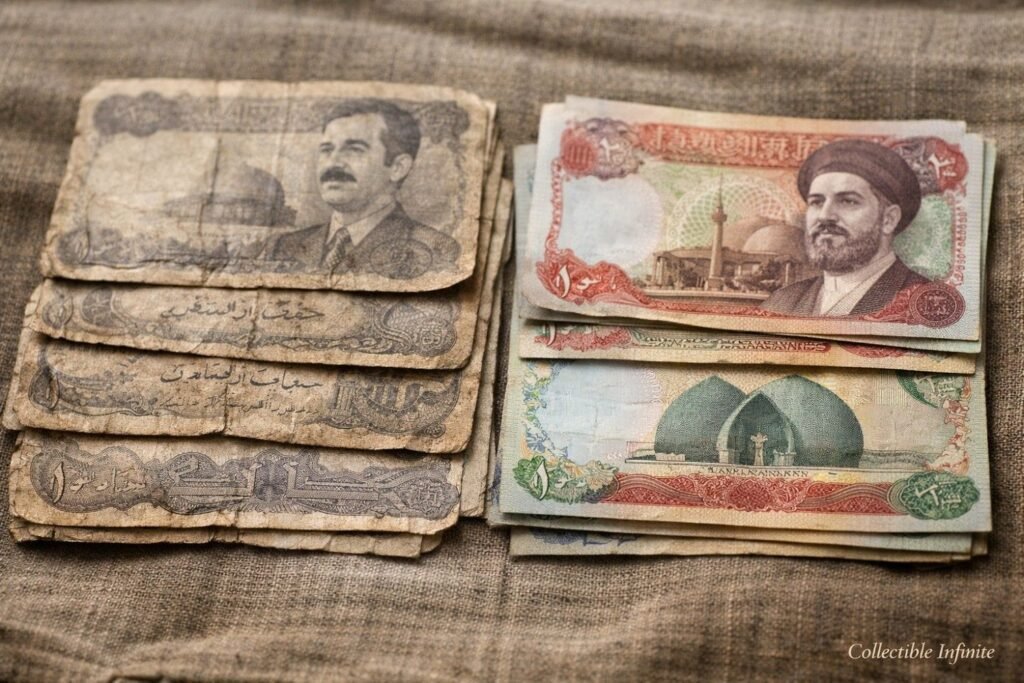
Historical evolution of Iraqi Dinar banknotes alongside modern uncirculated currency for collectors.

History of the Iraqi Dinar Origin and Evolution

Introduction I remember when i hold a 25,000 Iraqi dinar note for the first time. It was folded at corner, soft from year of use and smelled faintly of dust and old paper. I didn’t know much about money then, only that this note somehow mattered. Outside Iraq, people talk about the Iraqi currency like it’s just a number, an investment – “should i buy iraqi dinar?” “is now the right time to buy iqd?” – but inside, money is different. It’s bread, it’s bus fare, it’s wages stretched thin, it’s hope, sometimes, for tomorrow. I’ve seen people carry stacks of dinar notes, counting them slowly, almost reverently. People would sometimes frown and recount, whispering numbers to themselves. Money in Iraq isn’t just currency – it’s life in miniature. Before Iraq Had Its Own Currency Long before the dinar, people here already knew the value of trade. i’ve wandered through old markets in baghdad, basra, mosul and even then, you could feel it. coins clinked, voices called prices, spices and bread scents mingled in the air. Money moved hand to hand, sometimes silver, sometimes gold, sometimes foreign coins from traders passing through. People didn’t care where it came from – if it worked, they used it. Under Ottoman rule, coins moved quietly, no one really thinking beyond the day. After World War I, Britain took over and the Indian rupee became common. groceries, rents, wages – all in rupees. People adapted, of course, but it never felt theirs. It reminded them constantly of who really controlled things. I remember hearing someone say, “you counted your coins twice, not to cheat anyone, but to make sure you weren’t cheated by life.” The Birth Of The Iraqi Dinar In 1932, the Iraqi dinar appear. It was slow, careful, almost hesitant. the rupee didn’t vanish overnight. People took time to trust it, slowly, one note at a time. The dinar was pegged to British pound – not because anyone loved the pound, but because it was strong, it was reliable, it gave people something to lean on. I remember a story my grandfather told me: he was a boy, walking to the market, holding a new dinar note and feeling a strange mix of excitement and fear. “Would it be accepted?” he asked. “Would it last?” he would say later. trust doesn’t arrive in speeches – it arrives slowly, over days and months, through small, repeated actions. Early Notes And Daily Life The first dinar notes were printed abroad but made to feel familiar – Arabic letters, symbols that people recognized. I’ve seen them, tucked behind drawer in old shop, edge soft, smell of ink and dust clinging to them. People counted them carefully, sometime folding them again and again before handing them over. Money is intimate. Trust grows in hands, not in offices. Over time, the notes worked. prices stabilized. wages held value. saving became possible again. One day, my uncle brought home notes and shared them with neighbors over tea, explaining slowly, patiently, that this was now their money. Small interactions like this taught communities how to live with currency, how to trust it, how to plan around it. Life With A Reliable Dinar From 1940s to the 1960s, the dinar became ordinary. It worked, quietly. Oil revenue helped strengthen life: roads, schools, hospitals. Daily routines went on without panic. I remember my father talking about walking home from school, counting coins in his pocket, calculating the cost of bread, tea, bus fares. life felt predictable. Ordinary reliability is rare. People could save, plan, dream – even just quietly imagine a better day. The dinar allowed that. Political Shifts And Resilience The 1958 revolution changed everything politically. fear and hope mingled. yet the dinar endured. salaries were still paid, shop stayed open, life adjusted. It persisted because life demanded it, not because anyone guaranteed it. In the 1970s, oil nationalization brought new confidence. The dinar felt strong. trusted. older Iraqis talk about those days fondly – walking through markets, children fascinated by colorful notes, shopkeepers handling bills carefully, counting money in small stacks for weeks of wages. buying iraqi dinar, buying iqd, handling the currency – all part of daily life, all human, all tactile. War, Sanctions and Struggle War changes everything, slowly, painfully. During the Iran–Iraq war, the dinar weakened over time. Military spending drained resources, exports slowed, debt quietly grew. Prices crept up, saving shrank. People adapted quietly, hoping for normalcy. After 1990, sanction isolated the country. Imports stopped, government revenue disappeared, the dinar lost value fast. I remember seeing stacks of notes meant for one meal barely cover it. People stopped counting precisely. Money became physical – carried in bundles, folded, guarded. Life became a negotiation with the currency itself. In the north, swiss dinar note lasted longer. no new printing, no sudden floods of cash. people trusted them. value survived because belief survived. It was a quiet lesson for everyone: currency exists because people believe in it, not just because officials declare it. Market-Life Stories And Reflections I’ve spent hours in markets across Baghdad, Basra, mosul. vendors counting notes, calling out prices, adjusting coins for haggling customers. a family budgeting for a week’s groceries, stacking notes carefully, calculating every dinar. small moments of human adaptation. Sometimes, children would sit beside vendors, watching and learning how to handle money, how to fold notes, how to count quickly. elders would shake their heads, smiling. Buying iraqi dinar, buying iqd or purchasing Iraqi dinar currency isn’t just collecting – it’s an education, a ritual, a practice of life itself. Rumors of devaluation spread quickly. People whispered calculations, lined up at exchange shops, counted notes repeatedly. Small actions became urgent, daily, personal. I watched once as a woman carefully divided her notes for bread, tea and savings, sighing softly. This is the reality of money here – immediate, physical, human. After 2003: Repairing Trust After 2003, new Iraqi dinar notes appeared: cleaner, more secure, carefully printed. it wasn’t optimism; it

History of the Iraqi Dinar Origin and Evolution Read More »

0
    0
    Your Cart
    Your cart is emptyReturn to Shop
    Call Now